Microbiomics
Deeply characterize host and environmental microbial communities to reveal the complex interplay between microbiota and health.
Fungal De Novo Sequencing
Fungal genome de novo sequencing assembles the fungal genome without a reference, then annotates and analyzes it downstream. Combining the long reads of third-generation sequencing with the throughput of second-generation sequencing ensures high-quality assemblies. As research trends toward refinement, a high-quality fungal genome map provides the genomic basis for downstream work—sequencing and assembling the full genome to study its structure and function.
Principle Introduction
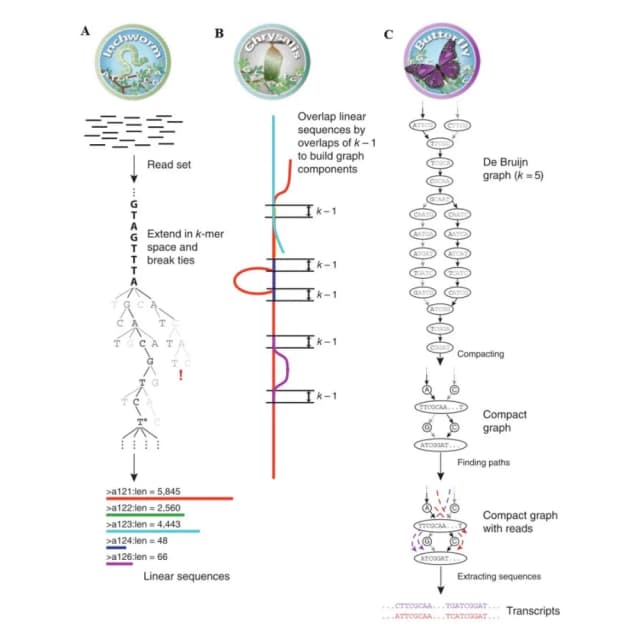
The core is technology complementarity plus fungus-specific assembly. Fungal genomes are large and complex; joint short/long-read assembly achieves advanced (near-finished) assemblies, predicting key genes/proteins and mechanisms. Workflow: sample/DNA prep, multi-platform library construction and sequencing, assembly, quality validation and functional annotation.
Literature
Published in Fungal Diversity, "Deciphering the evolutionary and taxonomic complexity of Diaporthales (Sordariomycetes, Ascomycota) through integrated phylogenomic and divergence time estimation" performed genome de novo sequencing on 113 Diaporthales fungi (pathogens, endophytes, saprobes), revising taxonomy, discovering 55 new species and revealing 181.5 million years of evolution. The team collected >10,000 specimens and isolated 800+ strains across China over eight years, integrating morphology, ecology, multi-gene and genome phylogenies, molecular clocks and metabolic pathway annotation to elucidate phylogenetic history, divergence timing and metabolic traits of this important Ascomycota group.
Deliverables
Assembly
core files, nuclear and mitochondrial genome sequences, QC reports.
Visualization
nuclear scaffold length distribution; mitochondrial circular map (gene positions).
Annotation
gene structure, functional and non-coding RNA annotation.
Report
basic module (QC, assembly validation); advanced module (comparative genomics, phylogenetics, secondary metabolite cluster prediction).
FAQ
Use vegetative hyphae at asexual stage, avoid complex-structure periods; if possible, germinate a single spore into mass hyphae for uniform prep.
Fungal genomes have many repeats and secondary-metabolite clusters; short reads (<300 bp) fragment assemblies, while 100 kb+ Nanopore reads span repeats for gap-free scaffolds, avoid PCR bias (better high-GC capture) and detect DNA methylation.
Primary assesses genome size, GC, repeats, heterozygosity and contamination with a 50X short-read library (data-volume only, no assembly metrics); advanced uses joint short/long-read libraries.
