Genomics
From sequence to function — exploring the essence of life at the DNA level to power breakthroughs in basic research, breeding and clinical translation.
Mitochondrial Genome Sequencing
Mitochondrial genome sequencing uses targeted enrichment, high-throughput sequencing and bioinformatics to decode the complete mitochondrial DNA (mtDNA) sequence and its variation. As the powerhouse of eukaryotic cells, mitochondria carry their own circular mtDNA independent of the nucleus. Human mtDNA is ~16.5 kb, compact, with 37 genes encoding 13 essential proteins, 22 tRNAs and 2 rRNAs. It is maternally inherited, evolves rapidly (mutation rate ~10× the nuclear genome) and is high-copy. High-throughput sequencing detects single nucleotide variants (SNV) and structural variants (SV), and supports gene-editing safety assessment and preimplantation genetic diagnosis. Deep sequencing of mtDNA variants is a powerful tool for mitochondrial disease mechanisms, forensics and maternal inheritance research.
Principle Introduction
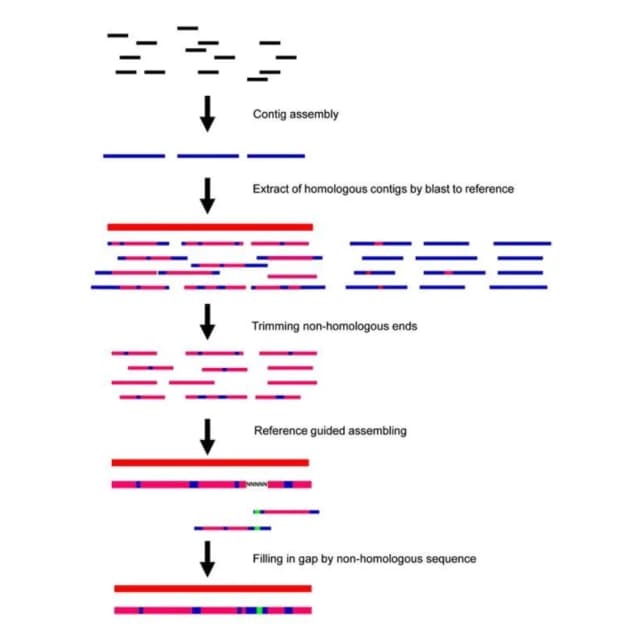
mtDNA is specifically enriched from total DNA by PCR or target capture, then sequenced at high throughput on an NGS platform to generate massive short reads. Bioinformatics aligns and assembles these reads against a mitochondrial reference into a complete circular mtDNA sequence, precisely identifying SNP, InDel and especially heteroplasmy (coexisting wild-type and mutant mtDNA).
Literature
Published in Genomics, Proteomics & Bioinformatics, "Mitochondrial Genome Variants and Nuclear Mitochondrial DNA Segments in 7331 Individuals from NyuWa and 1KGP" centered on the Chinese NyuWa genome resource combined with 1000 Genomes Project (1KGP) data, systematically analyzing mtDNA and nuclear mtDNA segments (NUMTs) in 7,331 Chinese individuals. Key results: 7,216 high-quality mtDNA variants across 22 macro-haplogroups (maternal diversity), 88 China-specific; 1,466 independent NUMTs (642 China-specific), enriched at LINE breakpoints; 12 mtDNA variants significantly correlated with 199 nDNA variants via GWAS, indicating nuclear-mitochondrial interaction. The study supports mitochondrial disease genetics and East Asian diversity research.
Sample Requirements
≥1 g.
≥1×10^6.
≥1 mL.
≥4 mL.
5–10 μm thickness, area >1 cm², 10–20 sections.
tissue volume >1.5 cm³.
fresh m≥0.4 μg; FFPE m≥1.6 μg.
Deliverables
Assembly
mitochondrial genome sequence in Fasta format.
Annotation
gene annotation files in GFF/GTF format.
Variant report
mutation file in VCF format (SNP, Indel position, frequency, functional prediction).
Bioinformatics report
assembly quality (N50, contiguity), base composition (AT/GC), phylogenetic tree (relatedness to other species).
FAQ
Use long-read sequencing to span repeats; tools like GetOrganelle and NOVOPlasty improve accuracy via multi-copy alignment.
Increase depth (>1000×), use target capture to enrich mtDNA, and apply Bcftools/GATK to filter MAF>1% mutations.
High-resolution genetic info, conserved yet fast-evolving—good for interspecies relatedness; smaller than nuclear genome, easy to sequence and annotate.
