Genomics
From sequence to function — exploring the essence of life at the DNA level to power breakthroughs in basic research, breeding and clinical translation.
Plant & Animal Resequencing
Whole-genome resequencing (WGS) of plants and animals sequences individual samples or tissues against a known reference genome to systematically identify genome-wide genetic variation. It efficiently detects single nucleotide polymorphisms (SNP), insertions/deletions (InDel), structural variants (SV) and copy number variants (CNV). Population-level statistical analysis of these variants reveals genetic diversity, population structure and evolutionary history. In agriculture, it rapidly maps candidate genes for key traits such as stress tolerance, yield and quality, providing a molecular genetic foundation for marker-assisted breeding and variety improvement while shortening breeding cycles. As sequencing costs fall and reference genomes proliferate, WGS has become one of the most rapid and effective tools in plant and animal genetics, germplasm evaluation and breeding innovation.
Principle Introduction
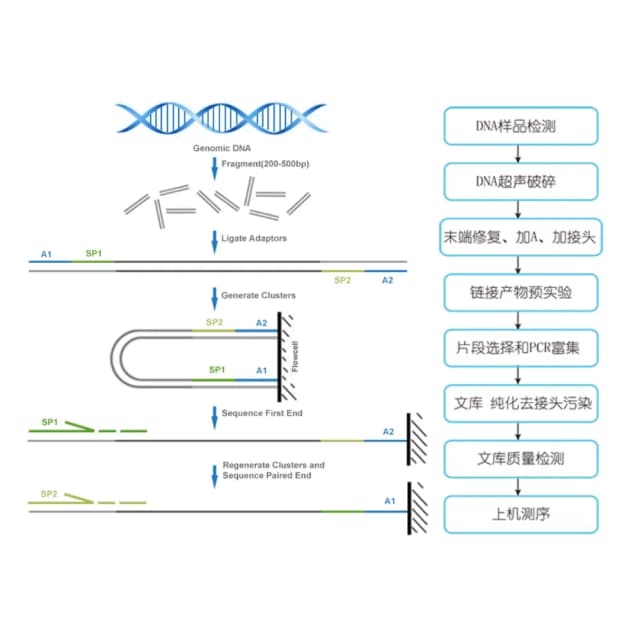
The principle of plant and animal resequencing is to sequence individuals or populations against a known reference genome. After DNA extraction, library construction and high-throughput sequencing, the resulting short reads are aligned to the reference genome to systematically detect genome-wide variants including SNP, InDel, SV and CNV. These variant data provide a critical foundation for uncovering genetic diversity, population evolutionary history, candidate gene mapping for important traits (e.g., via linkage analysis or genome-wide association study, GWAS) and molecular breeding.
Literature
Published in Horticultural Plant Journal, "The Near-Complete genome of Lycium ruthenicum shed light on the genetic mechanism of the fruit color differentiation" used whole-genome resequencing to analyze genetic differences among white, purple and black wolfberry (Lycium ruthenicum) fruits. The study found a 229-bp deletion in the promoter of AN1, a bHLH transcription factor and key regulator of the anthocyanin synthesis pathway; this deletion is the core driver of fruit color differentiation (black retains the full sequence, white is homozygous deletion, purple is heterozygous deletion). Resequencing provided high-resolution variant data for the genetic dissection of fruit color. By comparing genomic differences across fruit colors, the study precisely mapped the AN1 mutation and validated its regulatory role in anthocyanin synthesis, offering a key target (e.g., AN1 editing) for breeding new wolfberry varieties with high anthocyanin content and diverse fruit colors.
Sample Requirements
≥25 mg.
≥200 mg.
≥5×10^6 cells.
≥0.6 mL.
≥0.1 mL.
conventional library total DNA ≥0.4 μg; PCR-free library total DNA ≥2 μg.
Deliverables
Data QC report
quality assessment including sequencing depth, coverage uniformity, data yield and contamination.
Alignment quality and genome coverage assessment
reference alignment rate, sequencing depth uniformity and coverage across the genome.
Genome-wide variant detection and annotation
SNP calling, InDel calling, variant distribution visualization.
Population genetic structure and evolutionary relationship analysis
principal component analysis (PCA), phylogenetic tree construction, population structure.
Selective sweep analysis
detection of inter-population divergence in selected regions (Fst), genetic diversity (Pi) and combined ZFst analysis, domestication analysis (ZHp and ZFst combined).
Candidate gene functional enrichment
functional annotation, GO enrichment and KEGG pathway analysis of genes in candidate regions identified by selective sweep.
Population demographic history inference
effective population size dynamics over time.
FAQ
Common causes: parental genetic backgrounds differ too much, introducing noise from non-target traits; target trait is too complex (polygenic or quantitative)—try splitting traits or optimizing statistics; sequencing data contamination—check via blast on a subset; method mismatch—compare ED and snp-index results.
Region size and gene count depend on population size, parental difference, trait type, sequencing depth and genome quality; no uniform guarantee, but prior project experience allows rough estimates.
Possible reasons: the sequenced sample is distantly related to the reference (e.g., wild vs. domesticated); DNA contaminated by other species; poor reference genome assembly; overly strict alignment parameters.
