Single-Cell Omics
Resolve tissue heterogeneity at single-cell resolution to precisely define cell subpopulations and their differentiation trajectories.
10x Single-Cell ATAC-Seq
10x single-cell ATAC sequencing (Assay for Transposase-Accessible Chromatin using sequencing) is an epigenetics technology on the 10x Genomics microfluidics and Tn5 transposase platform that profiles chromatin accessibility at single-cell resolution, locating open regions (promoters, enhancers) to reveal epigenetic gene-regulation mechanisms. Chromatin accessibility determines transcription-factor–DNA binding efficiency. Unlike bulk ATAC, it captures subpopulation- and even cell-level accessibility differences while linking cell type and phenotype—applied in development, oncology, neuroscience, and immunology.
Principle Introduction
Based on 'transposase-mediated fragmentation–single-cell barcoding–sequencing': Tn5 binds open chromatin, cuts fragments, and inserts adapters. Single cells, barcode beads, and Tn5 are encapsulated; fragmentation and adapter tagging occur in-droplet. After amplification and library prep, cell barcodes assign reads to single cells; genome alignment and peak calling locate open regions, with motif analysis and annotation linking accessibility to regulatory networks.
Literature
Published in Nature Communications, 'Single cell multi-omics reveal intra-cell-line heterogeneity across human cancer cell lines' used 10x single-cell ATAC with transcriptomics to resolve heterogeneity within cancer cell lines. Multiple lines showed multiple epigenetic subpopulations with distinct open-chromatin regions linked to expression heterogeneity; accessibility differences concentrated in proliferation- and drug-resistance-related regulatory regions, with some subpopulations intrinsically resistant.
Sample Requirements
1×10⁵–1×10⁶ cells/mL, ≥1 mL, serum-free + 0.04% BSA, 4°C; viability ≥85%, no EDTA buffer.
≥0.1 g, preservation buffer, 4°C (no freezing), 24 h.
≥1×10⁶ cells, 4°C; note line, culture, treatment.
pellet ≥5×10⁶, EDTA-free freezing medium, liquid N2, dry ice; viability ≥80%.
intact embryo or organoid ≥0.05 g, 4°C, 12 h; note stage, culture.
Deliverables
Raw data
Fastq, QC (Q30, GC, duplication), barcode stats, peak calling.
Analysis
clustering, subpopulation open-region annotation, differential accessibility volcano, TF motif enrichment, regulatory network.
FAQ
Increase depth, enrich targets, tune peak/clustering params, use known markers.
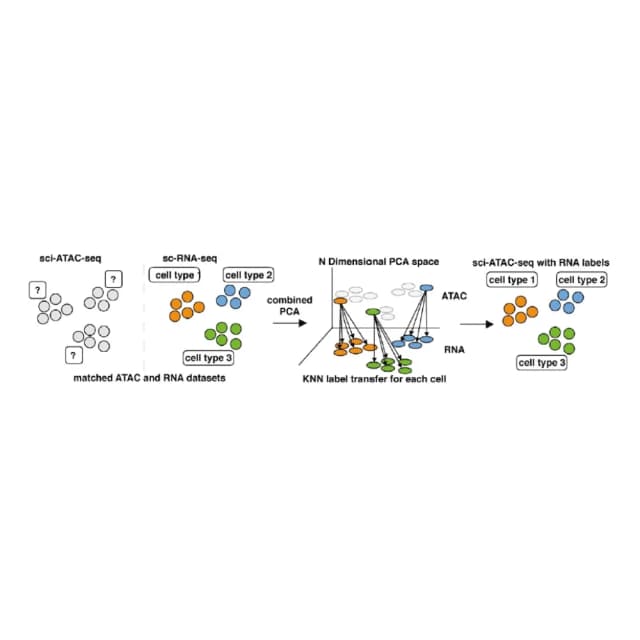
10x multiomics shares cell barcode; map open regions to expression, build epigenetic–transcription network.
