Single-Cell Omics
Resolve tissue heterogeneity at single-cell resolution to precisely define cell subpopulations and their differentiation trajectories.
DNBELAB Single-Cell VDJ Sequencing
DNBelab single-cell V(D)J sequencing is BGI's high-throughput immunomics technology on the DNBelab C4 library system and DNBSEQ platform, profiling TCR/BCR diversity at single-cell resolution to trace clonal origin, expansion, and functional status. As a domestic benchmark, it breaks import-platform barriers with unbiased DNB-array capture, high throughput, sensitivity, and multi-modal compatibility; unlike bulk V(D)J, it avoids population averaging and captures rare immune clones, linkable to transcriptomics and protein markers. Applied in CAR-T efficacy, infectious disease, autoimmunity, and vaccines.
Principle Introduction
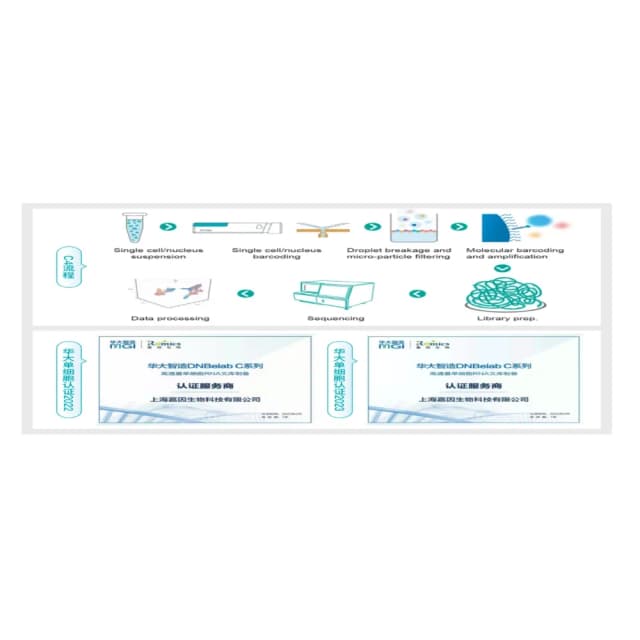
Based on 'high-density DNB array in-situ capture–targeted amplification–dedicated barcoding' without oil droplets: the DNB array electrostatically captures single T/B cells; V(D)J regions of TCR and BCR are amplified with specific primers while cell/molecular barcodes label each receptor transcript. After DNB library prep and DNBSEQ, barcodes assign reads per cell; assembly yields full V(D)J rearrangements, clonotypes, and expression, linkable to transcriptomes for a 3D 'clonotype–expression–function' map.
Literature
Published in Nature Methods, 'Integrative mapping of human CD8⁺ T cells in inflammation and cancer' used single-cell immune repertoire analysis via DNBelab single-cell V(D)J with transcriptomics to build a million-scale CD8⁺ T-cell reference atlas. Integrating 960k cells across 68 studies and 42 diseases, deep-learning model scAtlasVAE revealed heterogeneity and three exhausted subtypes with distinct TCR-sharing patterns between cancer and autoimmunity.
Sample Requirements
1×10⁵–5×10⁶ cells/mL, ≥1 mL, serum-free + 0.04% BSA, 4°C; viability ≥85%, FACS-enriched.
≥0.1 g, buffer, 4°C (no freezing), 24 h.
≥2 mL, EDTA/heparin, 4°C, 6 h; PBMC fresh, viability ≥90%.
pellet ≥5×10⁶, immune freezing medium, liquid N2, dry ice; ≤3 months.
≥1×10⁶ cells, 4°C; viability ≥90%.
Deliverables
Raw data
Fastq, barcode stats, QC, V(D)J amplification, DNB params.
Analysis
TCR/BCR clonotype annotation, diversity, expansion heatmap, V/J usage, functional association.
FAQ
Causes viability drop, receptor degradation; use gradient freezing, process within 2 h.
DNBelab C4 dual assay shares cell barcode.
Releases hemoglobin/nuclease, degrades receptors; gentle collection, anticoagulant, 6 h shipping, recollect if hemolyzed.
