Single-Cell Omics
Resolve tissue heterogeneity at single-cell resolution to precisely define cell subpopulations and their differentiation trajectories.
DNBELAB Single-Cell ATAC-Seq
DNBelab single-cell ATAC sequencing is BGI's high-throughput epigenetics technology on the DNBelab C series (C-TaiM4 droplet generator) and DNBSEQ platform, profiling chromatin accessibility at single-cell resolution to locate open regions (promoters, enhancers) and reveal epigenetic regulation. As a domestic benchmark, it breaks import monopolies with fast library prep, low contamination, and multi-modal compatibility; pressure-driven microfluidics captures tens of thousands of nuclei with transcriptome linkage. Applied in development, aging, tumor heterogeneity, and neuroscience.
Principle Introduction
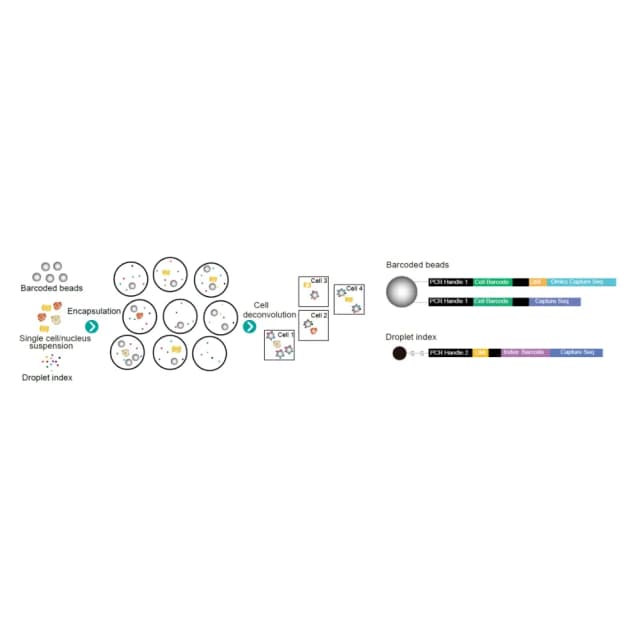
Based on 'microfluidic capture–transposase fragmentation–dedicated barcoding': the C-TaiM4 droplet generator encapsulates single nuclei, Tn5, and barcode beads in droplets; Tn5 cuts and tags open chromatin in ~6 min. Amplified DNB libraries are sequenced on DNBSEQ; barcodes assign reads, peak analysis locates open regions, and motif/target-gene annotation builds an accessibility–regulation network linkable to transcriptomes.
Literature
Published in Nature Communications, 'Multiomics and cellular senescence profiling of aging human skeletal muscle uncovers Maraviroc as a senotherapeutic approach for sarcopenia' collected sarcopenia and healthy muscle, using DNBelab single-cell ATAC with transcriptomics/proteomics. Senescence-associated cells (SASP+) increased with aberrant chromatin accessibility at inflammatory loci; CCR5 promoter accessibility correlated with senescent-cell abundance. CCR5 inhibitor maraviroc reduced accessibility and accumulation, improving muscle function.
Sample Requirements
1×10⁵–5×10⁶ cells/mL, ≥1 mL, serum-free + 0.04% BSA, 4°C; viability ≥85%, no EDTA; nuclei fresh.
≥0.1 g, buffer, 4°C (no freezing), 24 h.
≥1×10⁶ cells / ≥0.05 g; 4°C.
pellet ≥5×10⁶, EDTA-free freezing medium, liquid N2, dry ice; ≤3 months, viability ≥80%.
≥0.2 g, remove fascia, 4°C, 12 h; note site, age, health.
Deliverables
Raw data
Fastq, barcode stats, QC, peak calling, DNB params.
Analysis
clustering, subpopulation open-region annotation, differential accessibility volcano, TF motif, regulatory network, transcriptome linkage.
FAQ
Ensure ≥85% viability, optimize Tn5, increase depth, control time.
DNBelab multiomics shares cell barcode; map accessibility to expression.
