
Transcriptomics
Capture gene-expression dynamics with precision and reveal regulatory mechanisms — reconstructing gene-response patterns under any experimental condition.
Reference-Based RNA-Seq
Eukaryotic Reference-Based Transcriptome (ERBT) targets eukaryotes with a complete reference genome, using high-throughput sequencing to systematically quantify, differentially analyze, and functionally interpret mRNA (and non-coding RNA, extendable in some products) in cells/tissues. Its core advantage is leveraging a known reference genome to avoid de novo transcript assembly, directly achieving accurate expression quantification and variant detection via alignment, with far higher efficiency and reliability than reference-free transcriptomes. Compared with de novo transcriptomes, ERBT offers three core values: ① precise quantification—alignment rate usually ≥95%, enabling absolute/relative quantification at gene/transcript level; ② deep analysis—mining alternative splicing, SNP/InDel, gene fusions; ③ controlled cost and turnaround—lower data needs, 30%–50% shorter analysis. ERBT is now a standard technique for eukaryotic research and applications, widely used in disease mechanisms, plant/animal breeding, and drug development.
Principle Introduction
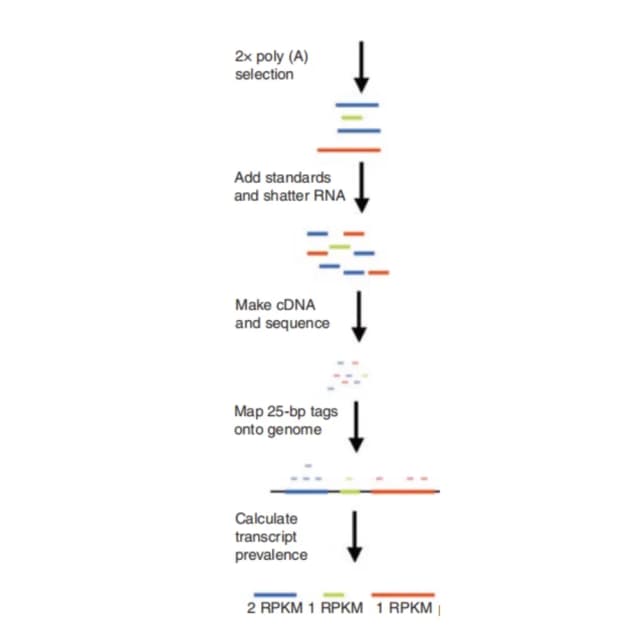
Core principle of ERBT: sample handling and RNA extraction using a high-purity RNA enrichment strategy—sample disruption, RNA extraction, quality verification; strand-specific library construction—RNA fragmentation, reverse transcription, adapter ligation, UDG digestion, PCR amplification; high-throughput sequencing on an Illumina platform; data analysis and functional interpretation—filtering, alignment, quantification, differential analysis, functional annotation, advanced analysis.
Literature
In Nature Communications, "Liquid crystal monomers induce placental development and progesterone release dysregulation through transplacental transportation." investigated how liquid crystal monomers (LCMs) affect placental development and progesterone release via placental transport. Using a mouse model and multi-omics (ERBT, proteomics, metabolomics), the authors systematically analyzed gene expression, protein, and metabolite changes in placenta after LCM exposure, revealing the molecular mechanism of LCM-induced placental dysfunction and providing key evidence for assessing reproductive-health risks of environmental pollutants. By aligning ERBT data to the mouse reference genome, they comprehensively identified differentially expressed genes, built regulatory networks, and pinpointed key signaling pathways affected by LCMs.
Sample Requirements
animal tissue ≥30 mg; plant tissue ≥100 mg; FFPE 5–10 μm sections ≥10, area ≥20 mm²;
adherent ≥1×10⁶; suspension ≥2×10⁶; cell slides ≥5;
serum/plasma ≥5 mL; CSF ≥2 mL, urine ≥10 mL; saliva ≥3 mL;
total ≥1 μg (standard), ≥2 μg (deep/advanced analysis).
Deliverables
QC report
RNA quality (Nanodrop, Agilent 2100 electrophoretogram, RIN); sequencing quality (valid data, Q30%, reference alignment rate, rRNA removal for strand-specific libraries); library quality (fragment size 200–500 bp, PCR duplication ≤15%).
Gene/transcript quantification and annotation
expression matrix (FPKM/TPM at gene/transcript level with names, IDs, values); differential analysis (DEG list with log2FC, P, FDR, volcano plot, heatmap, clustering); database annotation (GO, KEGG, Swiss-Prot, COG, pathway, sequence info).
Advanced analysis
alternative splicing (types, differential events); variant detection (SNP/InDel); co-expression network (WGCNA, TF–target network); custom analysis (gene fusion for tumors, time-series).
Analysis and interpretation report
conclusions (core DEGs, key pathways, candidate genes/biomarkers); interpretation (biological function, regulatory mechanism, expression trends); recommendations (validation, multi-omics).
FAQ
Not recommended—reliability drops sharply. RIN ≤6.0 indicates severe degradation: short-read fraction rises, alignment rate falls below 80%, low-abundance gene detection drops ~40%, and false-positive DEG rate increases. Remedies if recollection is impossible: a) degradation-specific library kits; b) increase depth to 15 G; c) filter degraded fragments in analysis (with information loss). Prefer recollection with RIN ≥6.8.
They affect annotation accuracy; prefer the latest version—hg38 (2013) adds ~10% annotations and fixes many errors versus hg19 (2009), improving DEG annotation accuracy by ~20%. Match study needs: if comparing with prior work, use the corresponding version but note the difference; for special species, use the latest species-specific database. Providers sync NCBI/Ensembl latest versions—request the version details.
Dual control via design and analysis: ① design—unified handling, same platform/batch library construction, inserted QC samples; ② analysis—ComBat/SVA batch correction validated by PCA, treat batch as a covariate in differential models, strictly filter DEGs to reduce interference.
