Epigenomics
Decode non-sequence genetic modifications and explore how the environment shapes gene expression through these marks.
ChIP-Seq
Chromatin immunoprecipitation followed by sequencing (ChIP-seq) is a high-throughput method for genome-wide protein-DNA interactions, combining ChIP with NGS. Widely used to map transcription factor binding, histone modifications and chromatin remodelers. In eukaryotes, DNA wraps histones into nucleosomes and folds into chromatin; regulatory proteins bind specific sequences or modified histones to control expression. Understanding these interactions is key to gene regulation.
Principle Introduction
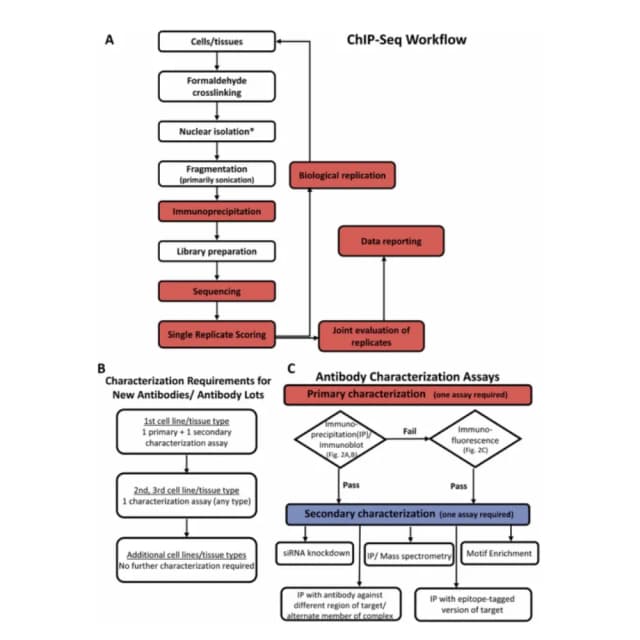
ChIP-PCR detects only known sites; ChIP-chip is limited by probes/resolution. ChIP-seq offers higher sensitivity, resolution and coverage—the gold standard. Crosslink proteins to DNA with formaldehyde; fragment chromatin (sonication/MNase) to 200–500 bp; immunoprecipitate with specific antibody; reverse crosslinks and purify DNA; build library and sequence; align reads and call peaks (binding sites).
Literature
Published in Cell, "Whyte WA, Orlando DA, Hnisz D, et al. Master Transcription Factors and Mediator Establish Super-Enhancers at Key Cell Identity Genes" used ChIP-seq to map Oct4, Sox2, Nanog, Klf4, Esrrb and Mediator in mouse embryonic stem cells, finding these master regulators highly enriched at super-enhancers—large, TF-dense, strong H3K27ac regions driving identity genes. Functional tests showed super-enhancers are exquisitely sensitive to TF/Mediator levels, revealing their core role in cell fate.
Sample Requirements
≥2×10^7 per IP reaction.
≥50 mg per IP.
0.5–1.0 g fresh tissue per IP.
plasma ≥5 mL; serum ≥10 mL.
total input >20 ng, concentration ≥2 ng/μL.
Deliverables
Standard analysis
peak calling (MACS2), IDR consistency, peak length and genomic element distribution (promoter, CDS, UTR).
Functional enrichment
peak-linked genes, GO and KEGG.
Motif analysis
de novo (HOMER/DREME), known TF motifs (JASPAR).
Advanced
multi-group differential peaks; multi-omics with RNA-seq/ATAC-seq; cross-species conservation; custom visualization (Circos, heatmap, IGV).
FAQ
Chain from experiment to analysis: Mock IP control for background; optimize antibody/chromatin ratio; high-salt washes; set peak thresholds by enrichment and significance.
By sample/target/goal: ChIP-seq is general (including TFs), captures indirect binding but needs many cells and has higher background; CUT&Tag/RUN has extremely low background, few cells (hundreds), fast, but suits accessible nuclear targets (histone marks) and may miss tight chromatin.
