
Epigenomics
Decode non-sequence genetic modifications and explore how the environment shapes gene expression through these marks.
DAP-Seq
DAP-seq (DNA Affinity Purification Sequencing) is a high-throughput sequencing technology used to identify DNA-binding proteins (DBPs), especially the precise genome-wide binding sites of transcription factors (TFs). ChIP-seq is the gold standard for mapping TF binding but requires high-quality, specific antibodies. For many novel or low-abundance TFs, suitable antibodies are often unavailable, greatly limiting ChIP-seq. DAP-seq expresses and purifies tagged fusion proteins (e.g., GST, His, or FLAG tags) in vitro and exploits their intrinsic DNA-binding activity to capture genomic DNA fragments, entirely bypassing the need for specific antibodies.
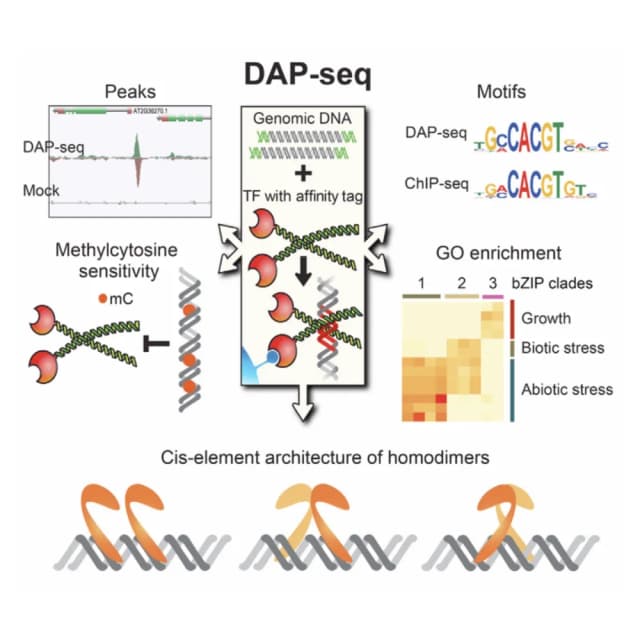
Principle Introduction
Express the DNA-binding protein: clone the cDNA of the target DBP (typically a TF) into an expression vector bearing an affinity tag (e.g., GST, FLAG) and express and purify it in vitro (e.g., E. coli or yeast). Build a genomic DNA library: extract high-quality genomic DNA from the sample, randomly fragment it to an appropriate size (usually 150–300 bp), ligate sequencing adapters, and construct a whole-genome DNA library. In vitro binding and purification: incubate the purified tagged protein with the genomic DNA library so the protein binds its specific DNA targets. Then use an antibody or affinity group against the tag (not the DBP itself; e.g., glutathione beads for GST tags) to specifically pull down the DNA fragments bound by the protein. High-throughput sequencing: sequence the enriched DNA fragments and the input DNA library (control) by NGS.
Literature
In Cell, O’Malley RC, et al. ("Cistrome and Epicistrome Features Shape the Regulatory DNA Landscape") used DAP-seq to map the genome-wide binding of the Arabidopsis ARF family (e.g., ARF2, ARF5); systematically analyzed the repeat types (DR/IR/ER), spacing, and phasing of the AuxRE (TGTC) motif; and validated the source of binding specificity using cross-species DAP-seq (maize ARF + Arabidopsis/maize gDNA). ARFs prefer paired AuxREs—ARF5 enriches at ~10 bp-spaced direct repeats (DR) and ARF2 at inverted repeats (IR); the IAA5 promoter contains 13 in-phase TGTC sites forming a supershift DAP-seq peak; DAP-seq signals at target promoters show periodic enrichment, implying coordination with chromatin structure; ARF binding preference is determined by the protein itself, not the genomic context.
Deliverables
Advanced analysis
Differential binding site analysis (multi-condition comparison), Motif enrichment analysis (MEME/HOMER), target gene functional enrichment (GO/KEGG), multi-omics integration (e.g., with RNA-seq), regulatory network construction, advanced visualization (heatmaps, signal profiles).
Deliverables
Project summary report (workflow, QC, core results, and interpretation).
FAQ
Possible causes and remedies: 1) Protein: low/ inactive TF expression or tag-induced misfolding—optimize expression and verify activity. 2) DNA: inappropriate gDNA fragment size or contamination—fragment to 200–300 bp and use high-purity, non-degraded gDNA. 3) Binding conditions: insufficient washing or poor buffer—increase washing stringency and optimize salt/detergent. 4) Controls: always include a negative control (empty vector or tag protein) to distinguish nonspecific binding.
Yes, but it requires strategic design. Standard DAP-seq suits single TFs. For complexes: 1) co-expression of multiple subunits in vitro; 2) pre-assembly by mixing purified proteins before DNA incubation; 3) adding known cofactors (e.g., hormones, small molecules). This helps reveal TF functions requiring chaperones or modifications for DNA binding.
