
Metabolomics
Capture the direct signals of phenotypic change through precise metabolite quantification — a direct readout of physiological status.
Energy Metabolism Metabolomics
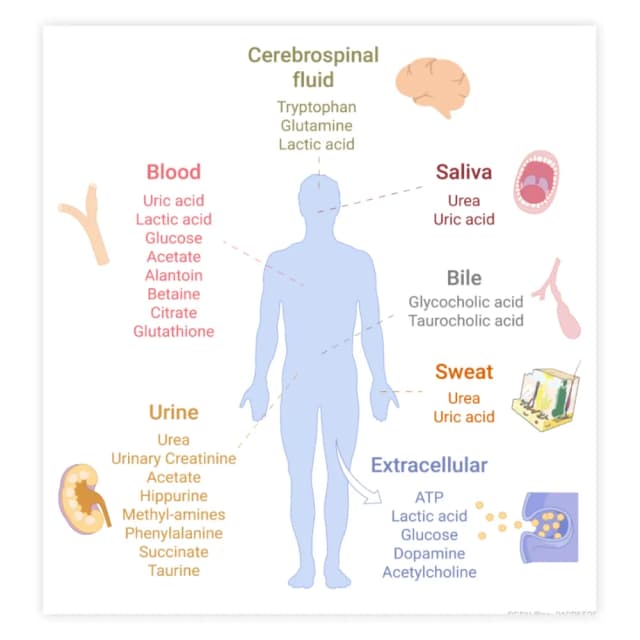
Energy metabolites are core molecules involved in energy synthesis, storage, and utilization—including sugars (glucose, glycogen), TCA-cycle intermediates (citrate, succinate), fatty acids, ketone bodies (acetoacetate, β-hydroxybutyrate), and adenylates (ATP, ADP, AMP)—distributed across cells, fluids, and tissues. As the 'energy carriers' of life, they span glycolysis, the TCA cycle, and oxidative phosphorylation, directly regulating energy supply and cellular function. Their dysregulation is linked to metabolic disease (diabetes, obesity), neurodegeneration, cancer, and fatigue syndrome. Compared with single-marker assays, panoramic energy-metabolite analysis systematically reflects the 'intake–conversion–consumption' pathway and captures early signs of metabolic imbalance. It is a core technology in biomedical, sports, and nutritional science for disease mechanisms, drug efficacy, sports nutrition, and health monitoring.
Principle Introduction
Energy-metabolite detection follows 'efficient extraction–precise separation–qualification/quantification': 1. Extraction: methanol–acetonitrile or buffer at low temperature co-extracts metabolites, with enzyme inhibitors (e.g., sodium fluoride) preventing degradation. 2. Separation: UHPLC or GC separates sugars, organic acids, and nucleotides by polarity/hydrophobicity/mass. 3. Identification & quantification: MS, UV, or FLD with isotope internal standards (glucose-¹³C₆, ATP-¹⁵N₅) corrects matrix effects for accurate quantification.
Literature
Published in Mol Cancer, 'Altered metabolism in cancer: insights into energy pathways and therapeutic targets' used panoramic energy-metabolite profiling to decipher metabolic reprogramming and therapeutic targets in tumors. Multi-center clinical samples (tumor, serum, normal tissue) were analyzed across glycolysis, TCA, and fatty-acid metabolism. Results showed the Warburg effect—preferential glycolysis with increased glucose uptake and lactate accumulation and reduced TCA intermediates—plus activated fatty-acid synthesis/β-oxidation and ATP/ADP imbalance, driving malignancy. The study provides a theoretical basis for targeting glycolysis and fatty-acid synthesis enzymes.
Deliverables
Raw data
UHPLC-MS/GC-MS chromatograms, retention times, ion peaks, peak areas, library matching.
Data report
qualitative identification of 40+ energy metabolites, quantification table (ng/mL, μg/g), differential volcano plots, energy-pathway enrichment, comparison with reference ranges, metabolic-state assessment.
FAQ
① SPE/liquid-liquid extraction; ② adjust chromatography; ③ MRM targeted scanning; ④ high-purity reagents/IS.
① diet/exercise/time inconsistency; ② handling inconsistency; ③ instrument drift; ④ circadian fluctuation. Standardize, calibrate, replicates (RSD≤10%).
① spike recovery 85%–115%; ② isotope IS; ③ CRM; ④ blanks; ⑤ replicate RSD≤10%.
