
Metabolomics
Capture the direct signals of phenotypic change through precise metabolite quantification — a direct readout of physiological status.
SCFA Analysis
Short-chain fatty acids (SCFAs) are organic fatty acids with fewer than 6 carbons—acetate, propionate, butyrate, isobutyrate, valerate, isovalerate. Gut microbes ferment fiber and resistant starch to produce SCFAs, linking host nutrition and gut homeostasis; butyrate in particular regulates gut and immune function and impacts human health.
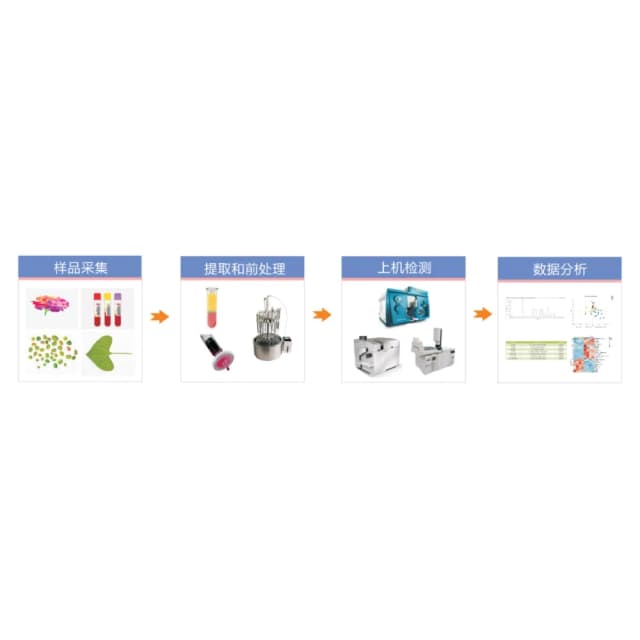
Principle Introduction
SCFAs are measured by GC, GC-MS or HPLC, each with trade-offs. GC offers high sensitivity/specificity for quantification; GC-MS combines GC separation with MS identification for complex samples; HPLC suits specific SCFAs. Sample collection/handling, SCFA extraction and GC analysis are the three key steps.
Literature
In "Circulating short-chain and branched short-chain fatty acids and the risk of incident type 2 diabetes: findings from the 4C Study" (Life Metabolism), based on the China Cardiometabolic and Cancer Cohort (4C, 3,414 participants), circulating SCFAs/BCFAs were linked to T2DM incidence. Total SCFAs, total BCFAs and isovalerate associated with T2DM (P<0.05); per SD rise in women, total SCFAs and propionate increased T2DM risk by 16% (OR=1.16) and 18% (OR=1.18), with no male association; in women, BCFA/isovalerate effects were partly mediated by triglycerides, insulin resistance and β-cell function. The study highlights SCFAs (especially propionate) in T2DM sex differences.
Sample Requirements
≥0.5 g;
serum/plasma ≥1 mL (routine) or ≥3 mL (low-abundance);
content ≥0.3 g; tissue ≥100 mg;
gut culture ≥1×10⁶; epithelial cells ≥5×10⁶.
Deliverables
QC report
sample quality (extraction recovery, purity); detection quality (resolution, Q30, mass accuracy); quantification quality (calibration linearity, intra/inter-day CV ≤10%, internal-standard recovery); QC sample RSD ≤15% and clustering.
SCFA quantification & annotation
absolute concentrations, FC, P; differential list, volcano/heatmap; structure, function, producing-bacteria (STRING) and pathway (KEGG) annotation.
Functional analysis
KEGG enrichment (Top10); correlation heatmaps with clinical indices and microbiota; ROC and combined-marker performance (AUC, sensitivity, specificity).
Interpretation report
distribution, key differential subtypes, phenotype association; biological significance and regulatory hypotheses.
FAQ
Homogenize/extract within 1 h or add acid stabilizer; keep 4°C; sealed tubes, minimal opening; −80°C in small aliquots, ≤2 freeze-thaw cycles.
Increase sample, combine liquid–liquid and SPE extraction; optimize gradient, scan counts (≥20/peak), MRM; use more sensitive derivatization reagents.
5–8 point calibration (R²≥0.99); ¹³C-labeled internal standards; GC-MS vs LC-MS parallel (bias ≤15%); spike recovery 90–110%.
Correlate SCFA concentration with SCFA-producing taxa; validate by FMT/probiotic intervention; build microbe→SCFA→host metabolic axes via KEGG.
