Metabolomics
Capture the direct signals of phenotypic change through precise metabolite quantification — a direct readout of physiological status.
Targeted Metabolomics
Targeted metabolomics is a precise strategy focusing on specific classes or known-function metabolites, absolutely quantifying targets via sensitive, specific platforms (e.g., LC-MS/MS). Unlike discovery (untargeted) metabolomics, it remedies limited accuracy, reproducibility and low-abundance detection, acting like a scope on the metabolic network to measure concentration dynamics in pathways (TCA cycle, amino-acid, lipid metabolism). It is indispensable in biomarker discovery, pharmacokinetics, plant secondary metabolites, nutrition and microbial metabolic engineering.
Principle Introduction
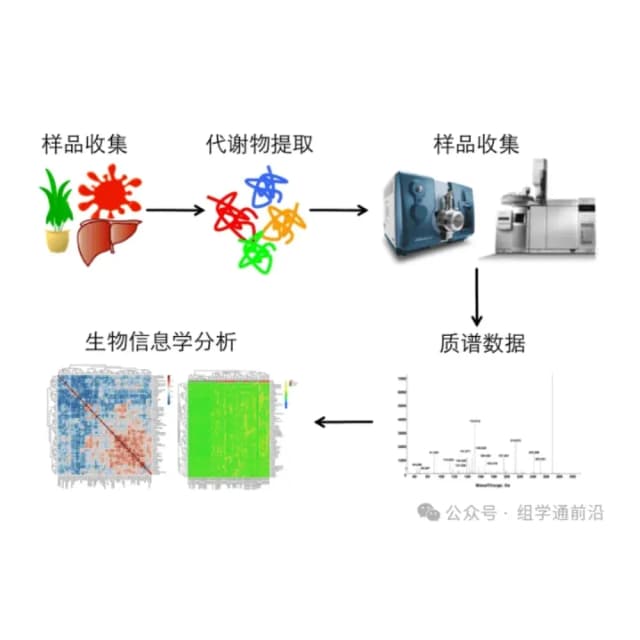
Targeted metabolomics identifies and quantifies targets against known standards. Workflow: select target list and prepare isotope/internal standards; separate by LC to reduce matrix interference; detect in MRM mode (precursor ion selected, specific product ion monitored—a double filter boosting specificity); compare target signal to internal standard and calculate absolute concentration from a calibration curve. This achieves high-specificity, high-sensitivity capture and precise quantification from complex samples.
Literature
In "Fasting-Induced FGF21 Signaling Activates Hepatic Fatty Acid Oxidation via PPARα" (Cell Metabolism), targeted metabolomics quantified energy-metabolite changes under FGF21. In fasting, hepatic FGF21 promoted fatty-acid oxidation; targeted MS of acyl-carnitines (β-oxidation intermediates) and TCA intermediates (citrate, α-ketoglutarate) showed mid/long-chain acyl-carnitines (C14, C16) decreased while TCA intermediates rose. The precise data directly proved FGF21 activates PPARα to drive fatty-acid flux into the TCA cycle, supporting energy homeostasis during fasting.
Sample Requirements
≥0.5 g, snap-freeze −80°C, dry ice; note site, strain, treatment
≥1 g, snap-freeze −80°C, dry ice; note variety, stage, treatment
≥1×10⁷ pellet, PBS ×2, snap-freeze −80°C, dry ice; note cell line, culture, treatment
serum/plasma ≥200 μL, urine ≥500 μL, −80°C, dry ice; serum non-hemolyzed, plasma note anticoagulant; urine fresh-frozen
culture ≥1 mL (OD600≥0.8) or wet pellet ≥0.2 g, snap-freeze −80°C, dry ice; note strain, culture, fermentation time
Deliverables
Targeted raw data
LC-MS raw chromatograms, retention times, characteristic ion-pair intensities.
Quantification report
concentrations, RSD, detection rate, standardized tables and plots (volcano, heatmap).
Data interpretation
differential metabolites (P, fold change), pathway enrichment, phenotype association.
FAQ
Unify pretreatment, calibrate LC-MS, accurately add internal standards, reduce matrix effects via isotope standards or better separation.
Add cleanup (SPE, gel filtration), optimize chromatography, use matrix-matched calibration, choose specific ion pairs.
Literature-based pathway selection, untargeted pre-screening, available standards, and custom lists from technical support.
