
Metabolomics
Capture the direct signals of phenotypic change through precise metabolite quantification — a direct readout of physiological status.
Flavoromics
Flavoromics is an interdisciplinary field integrating metabolomics, sensory science, and analytical chemistry that focuses on all flavor compounds and their interactions in food—volatile aromas (alcohols, ketones, terpenes, sulfur compounds), non-volatile tastants (free amino acids, nucleotides, organic acids, sugars, alkaloids), and precursors—found in fruits, vegetables, meat, dairy, fermented foods, and beverages. As the 'soul' of food quality, flavor drives consumer choice and is shaped by genetics, environment, processing (fermentation, roasting, brewing), and storage. Traditional flavor research relies on sensory panels or single-component assays, failing to reveal molecular mechanisms; flavoromics enables panoramic analysis to locate key active compounds and decipher flavor evolution, supporting quality improvement, replication, and product development.
Principle Introduction
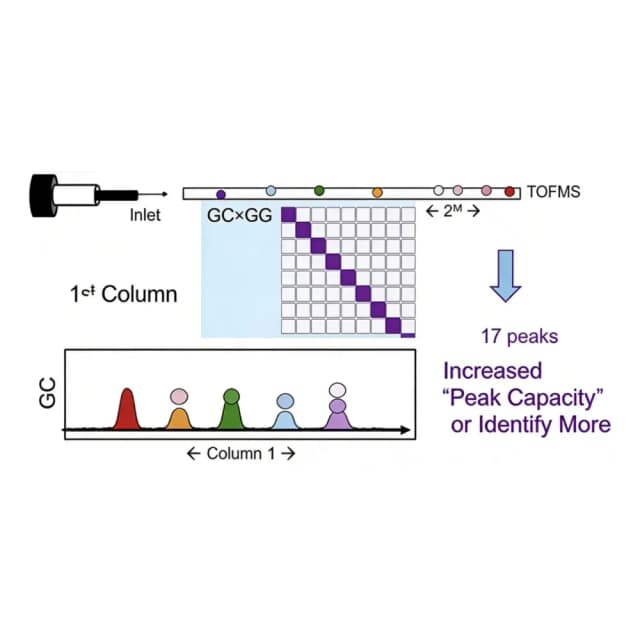
Flavoromics follows 'efficient extraction–separation–quantification–sensory association': 1. Extraction: HS-SPME, P&T, or SHS for volatiles; methanol/water or ethanol/water extraction (with deproteinization/delipidation) for tastants. 2. Separation: GC or GC-MS for volatiles by boiling point/polarity; UHPLC or LC-MS for non-volatiles by hydrophobicity/mass. 3. Identification & quantification: MS, FID, UV with library matching (NIST, Wiley) and external/internal standards (phenethyl acetate-d8, L-phenylalanine-¹³C₉) or standard addition. 4. Sensory association: correlating flavoromics data with sensory evaluation (e-nose, e-tongue, panel scores) to identify core active compounds linked to specific flavors (fruity, floral, umami, bitter).
Literature
Published in LWT, 'Flavoromics approach reveals dynamic changes in non-volatile and volatile compounds of Pixian broad bean paste with different stir-frying temperature' used flavoromics to dissect how stir-frying temperature affects volatile and non-volatile flavor compounds, guiding process optimization. Five temperature gradients were applied; HS-SPME-GC-MS and UHPLC-MS/MS profiled volatiles and tastants with sensory correlation. 15 core volatiles and 7 core non-volatiles were identified, and 140°C was optimal for richest flavor and highest sensory score.
Sample Requirements
≥100 g/sample, uniform maturity, sealed 4°C refrigerated shipping; note variety, origin, harvest time. Meat / aquaculture: ≥200 g (meat) / ≥500 g (aquatic), -80°C sealed, dry-ice shipping; note part, farming, slaughter time.
≥10 mL (liquid) / ≥20 g (solid), -20°C sealed, ice-pack shipping; note fermentation time, strains, process.
≥50 mL, -20°C sealed, ice-pack; avoid light; note type and batch.
≥50 g, sealed at room temp or -20°C per sample, ambient or ice-pack shipping; note raw material, process, storage.
Deliverables
Raw data
GC-MS/UHPLC-MS chromatograms, retention times, ion peaks, peak areas, library matching.
Data report
qualitative identification of 200+ flavor compounds, quantification table (μg/kg, mg/kg, μg/mL), differential volcano plots, heatmaps, PCA, core-flavor screening, sensory-association conclusions.
FAQ
① very low endogenous concentration; ② wrong extraction (fiber, time/temp); ③ poor storage (volatilization/degradation); ④ suboptimal MS. Change method/parameters.
① sample difference (variety, origin, maturity); ② processing fluctuation; ③ storage inconsistency; ④ workflow inconsistency. Standardize and use replicates (RSD≤10%).
① add cleanup (SPE, liquid-liquid); ② adjust chromatography; ③ MRM targeted scanning; ④ high-purity reagents/IS.
