
Proteomics
Dissect the proteome to uncover key biomarkers and decode the mechanisms of life from the terminal executors of function.
CO-IP-MS
Co-IP-MS (Co-Immunoprecipitation-Mass Spectrometry) couples immunoprecipitation with MS to systematically identify and validate protein–protein interactions (PPI). A specific antibody captures the bait protein and its direct/indirect interactors, which are then identified and quantified by high-resolution MS to reveal the regulatory network. It is a classic, physiologically relevant method for confirming interactions inside intact cells; non-denaturing lysis preserves interactions, and antibody/affinity capture isolates the complex for MS identification.
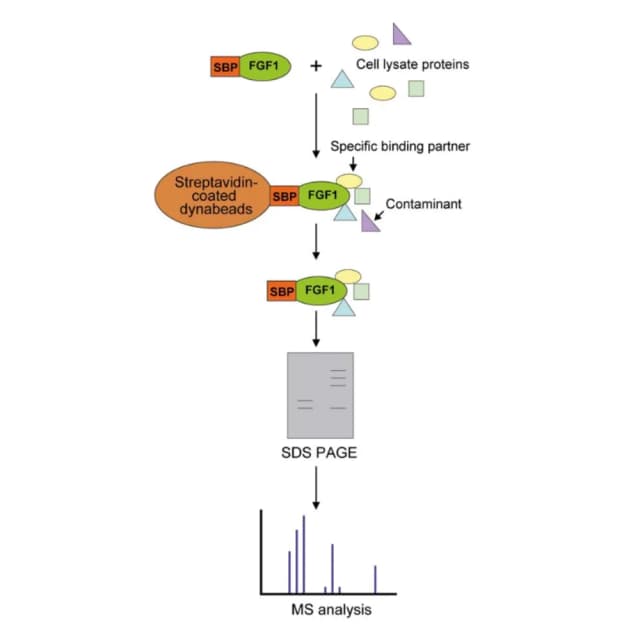
Principle Introduction
Co-IP-MS uses immunoprecipitation to capture the target protein and its partners, then MS to identify them, accurately recognizing and quantifying proteins and their interactions in complex samples. Workflow: sample pretreatment and protein extraction, immunoprecipitation of the complex, protein separation and MS sample preparation, MS identification and data analysis.
Literature
In "Natural variations of maize ZmLecRK1 determine its interaction with ZmBAK1 and resistance patterns to multiple pathogens" (Molecular Plant), GWAS mapped the broad-resistance gene ZmLecRK1 with resistant (Qi319) and susceptible (TY4) haplotypes. Co-IP-MS identified its key interactor, the leucine-rich-repeat kinase ZmBAK1. Further assays (tobacco transient expression, maize protoplasts, mutants) showed ZmLecRK1Qi319-induced cell death and multi-pathogen resistance depend on ZmBAK1, elucidating the ZmLecRK1–ZmBAK1 network for crop breeding.
Sample Requirements
≥20 μg
≥500 μL
≥50 grains
Co-IP/IP-MS >3.0 g/sample, WB >0.5 g/sample
Co-IP/IP-MS >1.0 g/sample, WB >0.1 g/sample
Deliverables
QC report
experiment quality (eluate purity, peptide recovery); MS quality (peptide/protein IDs, Q30, protein FDR); interaction quality (bait detection 100%, IgG non-specific fraction, replicate correlation).
Interactor identification & annotation
list (name, MW, peptide matches, coverage, Intensity); specific-interactor list, volcano/heatmap; UniProt function, localization, known interactions (STRING), binding-domain prediction.
Functional analysis
STRING PPI network with core nodes; GO/KEGG/Reactome enrichment (Top20) of the interaction network.
Interpretation report
core specific interactors, network function, phenotype association; biological significance, mechanistic hypotheses; suggested validation plans.
FAQ
Membrane: detergent-containing lysis, avoid high salt, add lipid stabilizers. Nuclear: nuclear extraction kit, low-salt lysis (10 mM Tris-HCl); choose antibodies against intracellular domains; verify localization by fractionation.
Reciprocal Co-IP for bidirectionality; immunofluorescence co-localization by confocal microscopy; functional validation via knockdown/overexpression.
Co-IP-MS: in vivo, native (direct+indirect), for screening/identification; Y2H: in vitro, direct only, for initial screening; FRET: in-cell real-time, quantifies direct binding.
